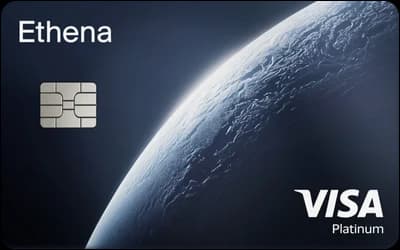

Best crypto debit & credit cards in Asia

Top-rated cards sold for this region rather than worldwide: MEXC Card (4.1/5), Avici Card (4.0/5) and Decard Card (3.5/5).

Asia behaves like a dozen separate markets. A Singapore-licensed card under MAS won't necessarily ship to Hong Kong; a Japanese FSA-registered product almost never lets Indians, Indonesians or Thais apply. The category lists every card we've found that explicitly allows at least one Asian residency in its application form (currently 49), but the gating happens country by country. Most of these cards are loaded with stablecoins, because SEPA and ACH don't reach an Asian bank account. India is the hard case: almost nothing on this site accepts Indian residents, and our research note explains why.

Read the country list on each card detail page before getting attached. Several cards listed cover Southeast Asia broadly through Bridge, Stripe or other infrastructure providers, with no local licence of their own. You can pay with them the same way. The regulatory recourse differs. Tangem Pay reaches parts of the Asia-Pacific with a self-custody card loaded in USDC or USDT.

Some cards below link to affiliate partners, and we may earn a commission if you sign up. The order comes from our public score, and partner links play no part in it. Details are in our editorial disclosure.

Cards found 49

Questions about best crypto cards in Asia

Which crypto card in Asia is best in 2026?

Ranked on how closely the card is aimed at this region, with our public score breaking ties, the top three are MEXC Card (4.1/5; Asia), Avici Card (4.0/5; USA + LATAM + Asia + Africa) and Decard Card (3.5/5; Asia + Australia). The list below stays in score order, so these are not always its first cards. Cards sold worldwide are in the list as well; these are the highest-rated of the ones aimed at this region.

Which Asian countries have the most crypto card options?

It depends on the card far more than on the country, because each issuer keeps its own list. Global cards that accept most of the region usually exclude mainland China and a handful of sanctioned states, while local products take one country only. India is the outlier: in our own checks only three cards let an Indian signup reach the document step.

Is using a crypto card legal in Japan and Singapore?

Japan regulates crypto-asset exchanges and payment services under its Payment Services Act, supervised by the FSA. Singapore's MAS licenses digital payment token service providers under the Payment Services Act 2019. Neither law bans spending with a card; what decides whether you can get one is whether the issuer accepts residents of your country.

How do I top up a crypto card in India?

Usually you can't. We have not found a card on this site that documents a UPI, IMPS or NEFT top-up, and most cards either name India in their exclusion list or publish no confirmation that Indian residents can apply. The India research note sets out the banking, prepaid-instrument and reporting rules behind that.

Are crypto cards available in China?

Mainland China restricts crypto trading, and many cards on this page exclude mainland residents. Hong Kong is treated as a separate market, and several cards that exclude the mainland accept Hong Kong residents. Check the country list on each card before applying.

What currencies do Asia-available crypto cards support?

Most cards hold USD or a stablecoin (USDC or USDT) and convert when you spend in local currency, so the FX line on the card page is the number to read. Some are built around a local currency: Decard bills in SGD or USD.