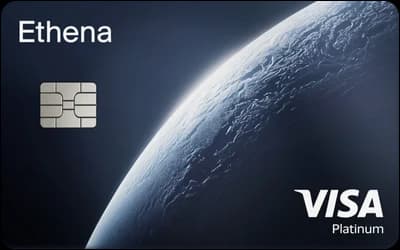


Jupiter Card Review 2026
Reviewed by Mihail B. in · · how we verify
Algorithmic score, not user reviews: how it is calculated
Get Jupiter CardNot a partner link. We earn nothing from this card; it goes straight to the issuer.
Fees and limits
| Issuance fee | Virtual free; physical $13.13 plus shipping, with $30 off tracked shipping if your balance is $1,500 or more |
|---|---|
| Annual fee | Free |
| FX fee | 1% FX fee (Rain-issued) or 1.8% FX fee (DCS-issued) on non-USD transactionsThe fine print
|
| ATM limit | Rain-issued physical cards only: $1 plus 0.65% per withdrawal, plus $0.30 plus 1% FX on a withdrawal in a currency…The fine print
|
| Spending limit | Rain-issued cards: no limit. DCS-issued cards: $50,000 per day and $990,000 per year |
Fees change; the current ones are in Jupiter’s terms.
Features
- Welcome bonus: $20 bonus
- Cashback: 2% base (4% via referrals)
The fine print
- 2% base cashback with a $100/month cap
- Up to 4% (cap $200/month) via the referral program (2+ qualifying referrals in the prior month, re-earned monthly)
- QR Pay purchases earn no cashback
- USD purchases are 0% FX
- Non-USD 1% (1.8% APAC)
- Cashback is paid in USDC
- Custody: Hybrid: the Jupiter wallet is self-custody; the card spends a USD balance held by the issuing partners Rain or DCS
- KYC: Yes
- Card type: Virtual, with a physical card rolling out in phases for $13.13 plus shipping
- Top up with: USDC or USDT on Solana with no processing fee
Full list
- Supported tokens from other networks are converted to USDC, with a processing fee of at least $0.30, 0.02% for stablecoins or 0.1% for other tokens plus the swap cost (minimum deposit $3, $10 on Ethereum)
- The deposit address accepts only USDC and USDT, other tokens only through Send to Spend in Jupiter Mobile
- Deposits are not converted to USD and the balance is shown in USD
- Bank transfers into USD and EUR virtual accounts
- Available countries: Antigua and Barbuda, Argentina, Australia, Bahamas, Bangladesh, Barbados, Belize, Bolivia, Brazil, Cayman Islands…
Full list
- … Colombia, Costa Rica, Côte d'Ivoire, Dominica, Dominican Republic, Ecuador, Egypt, El Salvador, Ghana, Grenada, Guatemala, Guyana, Honduras, Japan, Kenya, Malaysia, Mexico, Morocco, New Zealand, Nigeria, Pakistan, Panama, Paraguay, Peru, Philippines, Saint Kitts and Nevis, Saint Lucia, Saint Vincent and the Grenadines, Senegal, Singapore, South Africa, South Korea, Suriname, Taiwan, Thailand, Trinidad and Tobago, Turks and Caicos Islands, Uganda, United Arab Emirates, Uruguay, Vietnam, Zambia
- United States: Alabama, Alaska, Arkansas, California, Colorado, Connecticut, Florida, Hawaii, Illinois, Indiana, Iowa, Kansas, Kentucky, Maine, Massachusetts, Michigan, Minnesota, Montana, Nebraska, New Hampshire, New Jersey, New York, North Carolina, Oklahoma, Pennsylvania, South Carolina, Texas, Utah, Virginia, West Virginia, Wyoming
- Bangladesh and Nigeria are paused
- Not available in the EEA or the United Kingdom
Who issues the Jupiter Card
The Jupiter Card has a different issuer depending on where you sign up. Each one is listed below with its own source.
The Jupiter Card is issued by Rain (Signify Holdings, Inc.), USA (New York) (Visa Principal Member (Mar 2025) + Mastercard Principal Member (4 May 2026); program manager turned named issuer on newer launches). The issuer is named in the source linked below. The docs say the card is "issued by two partners, Rain and DCS"; Rain covers cardholders outside Asia-Pacific.
Primary source · All cards issued by Rain (Signify Holdings, Inc.) · Why the issuer matters
The Jupiter Card is issued by DCS Card Centre Pte. Ltd., Singapore (MAS, ex-Diners Club). The issuer is named in the source linked below. The docs say the card is "issued by two partners, Rain and DCS"; DCS covers Asia-Pacific.
Primary source · All cards issued by DCS Card Centre Pte. Ltd. · Why the issuer matters
Supported cryptocurrencies
You can load the Jupiter Card with crypto; the 3 assets we track for it are listed below.
Pros and cons
Pros
- No fee on USD payments
The fine print
- No annual fee and no processing fee on USDC or USDT deposits from Solana
- USD and EUR virtual accounts
- No spending limit on Rain-issued cards
- No Jupiter fees on Apple Pay or Google Pay
- Available in listed US states including New York
- Earn 2% cashback on eligible purchases
- No card issuance fee
- Welcome bonus: $20 bonus
- Banking rails: SEPA / SWIFT support
- Multi-chain top-up across 4+ networks
Cons
- Not offered in the EEA or UK
The fine print
- Physical card still rolling out
- Base cashback 2% capped at $100 a month, 4% only with two qualifying referrals the month before
- QR Pay purchases earn no cashback
- The spend balance is USD held by the card partners, not in your wallet
- Card refunds on Rain cards can be spent but not withdrawn
Regional availability
Available in several regions
Latin America, the Caribbean, Asia-Pacific, Africa, the Middle East and 31 US states including New York; EEA and United Kingdom not listed.
Banking and fiat rails
Card overview
Base cashback is 2%, capped at 100 dollars a month, and the 4% rate only unlocks by keeping two qualifying referrals per month. It resets monthly, QR Pay purchases earn nothing at all, and payouts land in USDC. Jupiter's card is a Visa that spends a separate balance shown in USD, not your wallet. USDC or USDT on Solana goes in with no processing fee; supported tokens from other networks are converted to USDC for a processing fee of at least $0.30, 0.02% on stablecoins or 0.1% on other tokens, plus the swap cost, and tokens such as SOL or JUP go in only through Send to Spend in Jupiter Mobile.
USD and EUR bank transfers into virtual accounts work too. USD purchases carry no FX, non-USD runs 1% (1.8% on the APAC issuer), and the card loads into Apple Pay or Google Pay at no extra fee. Custody is split: the Jupiter wallet stays yours, but the spend balance is held by card partners Rain and DCS until you spend it. It is sold across Latin America, the Caribbean, Asia-Pacific, Africa, the Middle East and 31 US states including New York; the EEA and the UK are not on the list.
The card is virtual, and a physical one is rolling out in phases for $13.13 plus shipping. Rain-issued physical cards withdraw cash for $1 plus 0.65%, with no cashback on ATM use; DCS-issued cards cannot use ATMs yet. For Solana-native spenders in those markets it still stacks up, just at 2%, not the 4% affiliate reviews advertise.
Common questions about the Jupiter Card
We do not collect user reviews. Answers come from the card terms, the issuer disclosure and the regulator registers we could reach, rechecked on the Data verified date above.