

Decaf Card Review 2026
Reviewed by Mihail B. in · · how we verify
Algorithmic score, not user reviews: how it is calculated
Get Decaf CardNot a partner link. We earn nothing from this card; it goes straight to the issuer.
Fees and limits
| Issuance fee | $5 (virtual); $10 (physical US); $90 (physical international) |
|---|---|
| Annual fee | Free |
| FX fee | 1% of each transaction in U.S. dollars as the international transaction fee in the US card termsThe fine print
|
| ATM limit | $250/transaction, 3x daily (physical only) |
| Spending limit | Not disclosed |
Fees change; the current ones are in Decaf’s terms.
Features
- Custody: Hybrid custody
The fine print
Hybrid: the Decaf Wallet is non-custodial and Decaf does not hold your private keys, but the card spends a separate card balance that you load with USDC from the wallet
- KYC: Optional: a no-KYC tier is available
- Card type: Virtual + Physical
- Top up with: USDC moved from the Decaf wallet to the card; the wallet takes USDC deposits on Solana and Stellar, bank transfer and card payments
- Available countries: Global except Belarus, China, Cuba, India, Iran, Iraq, Israel, Myanmar, Nepal, Nicaragua, Nigeria, North Korea, Puerto…
Full list
- … Rico, Russia, Syria, Turkey, Ukraine, Venezuela, Vietnam
- US excludes: AZ, DE, GA, ID, LA, MD, MT, OH, OR, RI, WA, WI
Who issues the Decaf Card
Decaf Card does not name its issuer outright, and on the documents we could reach, the sponsor appears to be Lead Bank, USA (Missouri state-chartered); program managers Bridge and Stripe, inferred from the program manager and not stated by the issuer itself.
Supported cryptocurrencies
You can load the Decaf Card with crypto; the 2 assets we track for it are listed below.
Pros and cons
Pros
- Non-custodial wallet on Solana and Stellar; no annual or monthly fee; virtual card for $5
- No-KYC option with minimal verification
Cons
- The issuer charges 1% on foreign transactions under the US card terms, up to 2% under the non-US terms
The fine print
- No EVM chains
- Physical card costs $90 outside the US
- No cashback
- Not offered in 12 US states or 19 countries including India and Nigeria
- ATM cash capped at $250 per withdrawal, three a day
- Card issuance fee: $5 (virtual)
- No IBAN or bank-account features
Regional availability
Available worldwide
The Decaf Card is available in most countries, except Belarus, China, Cuba, India, Iran, Iraq, Israel, Myanmar, Nepal, Nicaragua, Nigeria, North Korea, Puerto Rico, Russia, Syria and 4 more.
Banking and fiat rails
Card overview
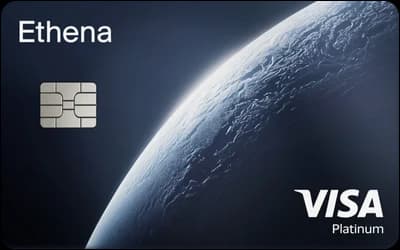
Decaf pairs a non-custodial wallet on Solana and Stellar with a Visa card, and the two are separate. Decaf does not hold your keys, but the card spends its own balance, which you load with USDC from the wallet using Add Funds, so we list custody as hybrid. Individuals open a personal account, where the card is called Decaf Visa Platinum. Decaf adds no FX markup of its own, but the issuer's US card terms charge 1% on each foreign transaction (the non-US terms allow up to 2%), so abroad you pay Visa's rate plus 1%.
Virtual issuance costs 5 dollars, a US physical card 10, and the international physical version jumps to 90, which is where the pricing stops being friendly. Coverage is global with two footnotes: nineteen countries and territories are excluded, among them India, Nigeria, Turkey, Ukraine and Vietnam, and so are twelve US states, including Washington, Ohio and Oregon. There is no personal IBAN, and SEPA funding is listed for business accounts only. ATM runs 250 dollars per withdrawal, three times a day, physical card only.
No cashback of any kind. Yield sits apart from the card: the Invest tab deposits USDC into the Lulo.fi lending platform as Protected or Boosted deposits, with no rate published outside the app. Solana-native users who value custody over rewards are the audience. EVM users have nothing to connect here.
Common questions about the Decaf Card
We do not collect user reviews. Answers come from the card terms, the issuer disclosure and the regulator registers we could reach, rechecked on the Data verified date above.