

Earn, spend, invest: five crypto neobanks, measured inside the app
On 27 August 2026 we opened five crypto neobanks on our own phones, and three of the five apps disagreed with their own product pages. Ether.fi, Tria, MetaMask, Nexo and Hyperbeat all sell the same promise: one account that earns yield, spends by card and trades markets.
The pitch used to be “spend your crypto”. Somewhere along the way it became “move your whole financial life here”: park money and it earns, tap the card, trade from the same app. Five live products now make that promise with a straight face. Marketing pages are cheap, so we didn’t start there. We installed all five apps on our own phones, funded accounts where it mattered, and captured every rate screen on the morning of 27 August 2026. The screenshots below are unedited. Every number in this article is either on one of them or linked to the page that publishes it.
Three of five pay on the spending balance, and three apps disagreed with their own pages
- All five apps sell the earn-spend-invest triangle, but only three pay yield on the balance the card spends from. Ether.fi debits its earning vault at purchase. MetaMask spends from the mUSD account that earns. Nexo’s Debit Mode spends the interest-bearing balance. Tria and Hyperbeat pay yield in products their cards cannot debit.
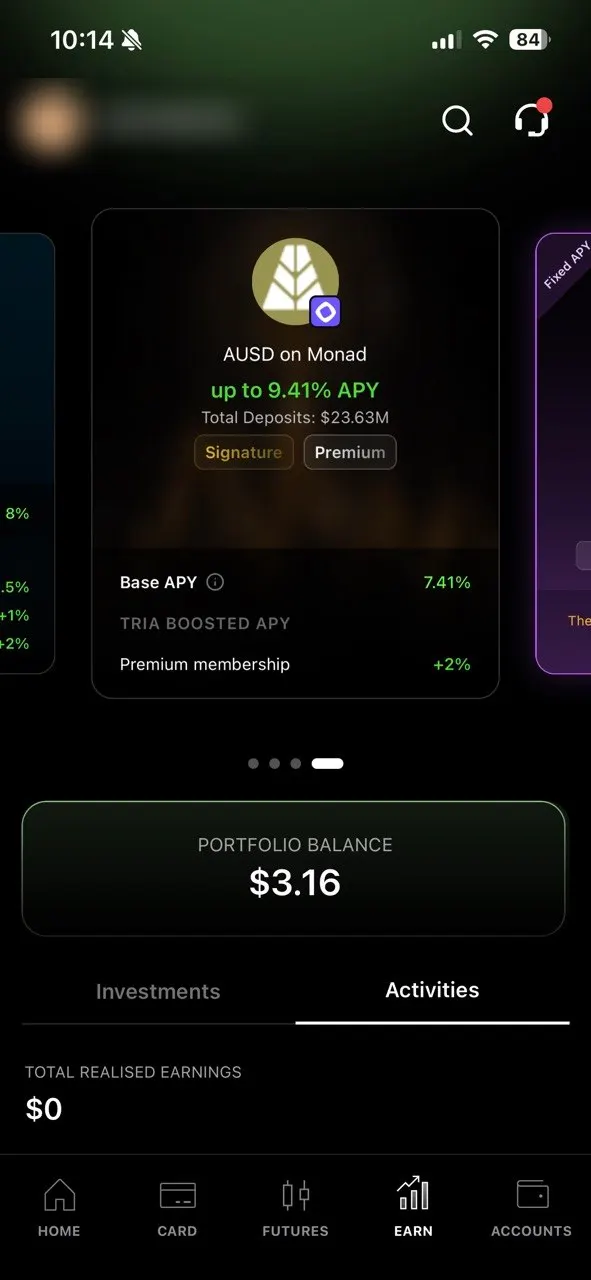
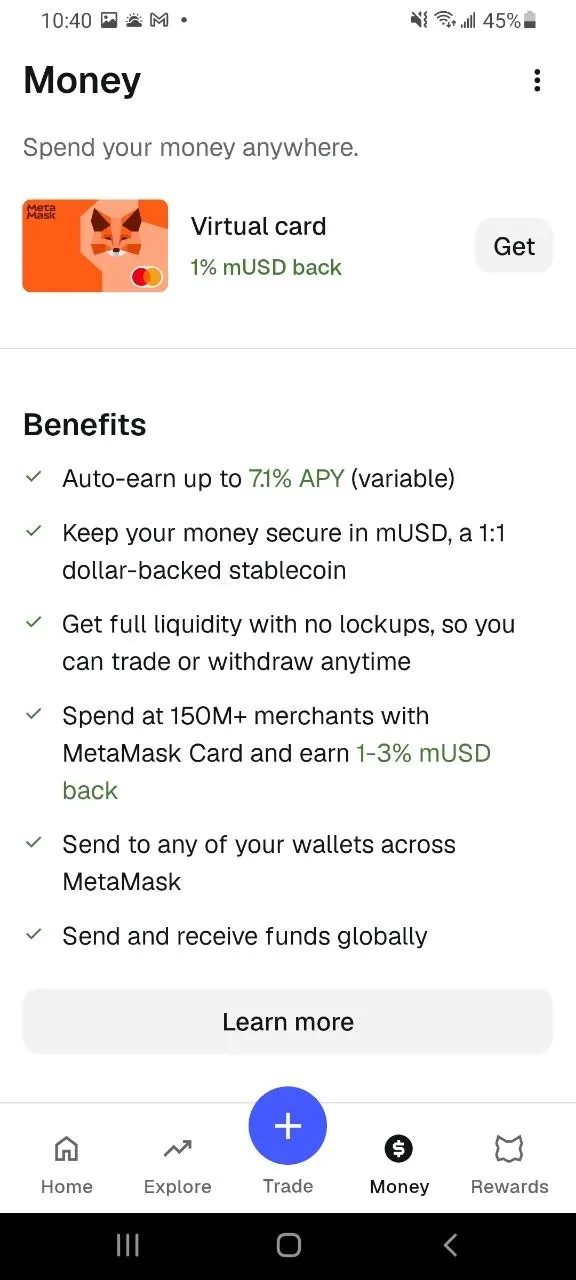
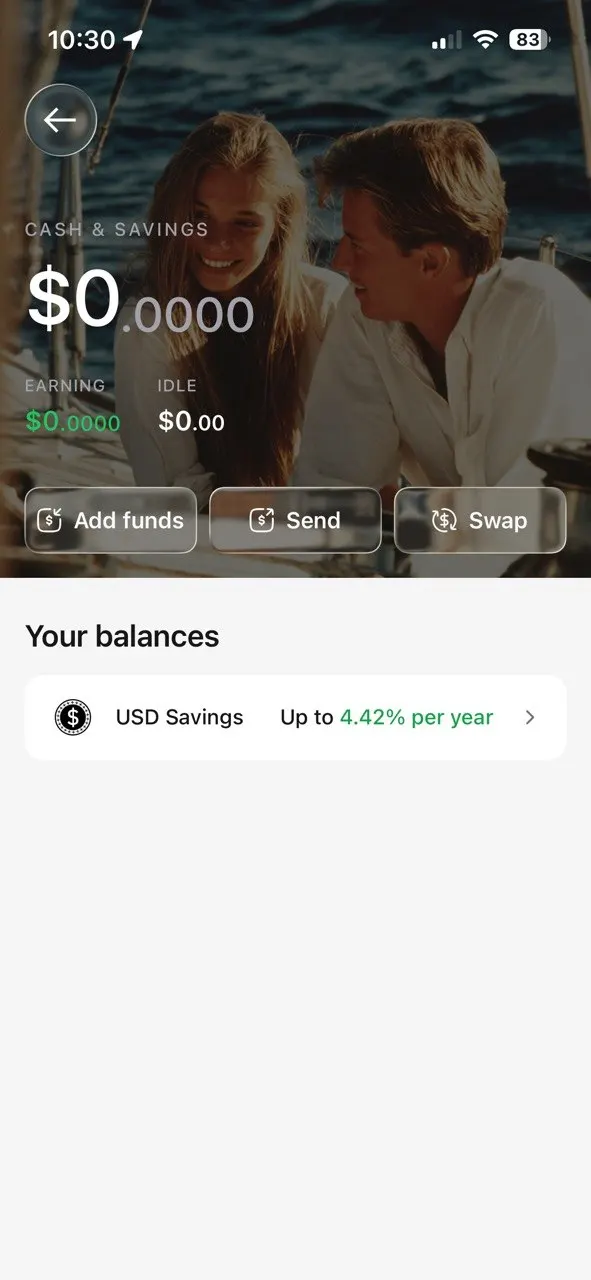
- The in-app rate disagreed with the published rate on three of the five apps, in both directions. On 27 August 2026: Hyperbeat’s app showed 4.42% where its pages say up to 8%. Tria’s AUSD vault showed 9.41%, down from 22.17% on the same tile on 28 July. MetaMask’s app showed 7.1% where the published figure had been 4%.
- Three of the five run the invest leg on the same venue. Tria, MetaMask and Hyperbeat all execute perpetual futures on Hyperliquid. Our trading-desk research found the same concentration across the wider catalog; this five reproduces it in miniature.
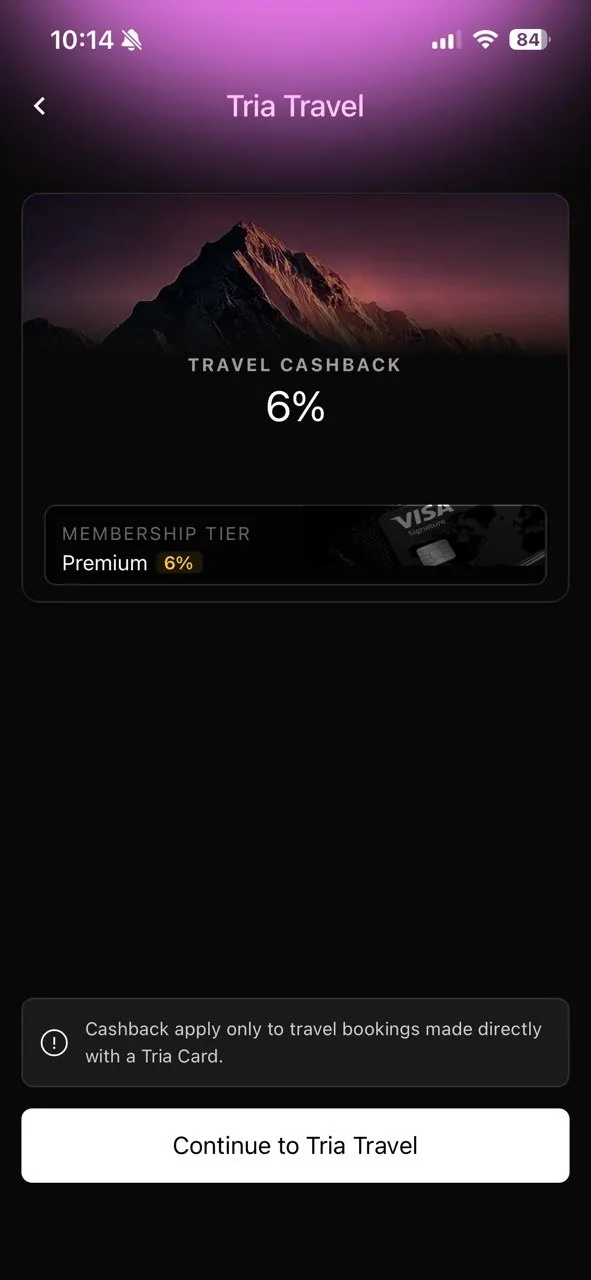
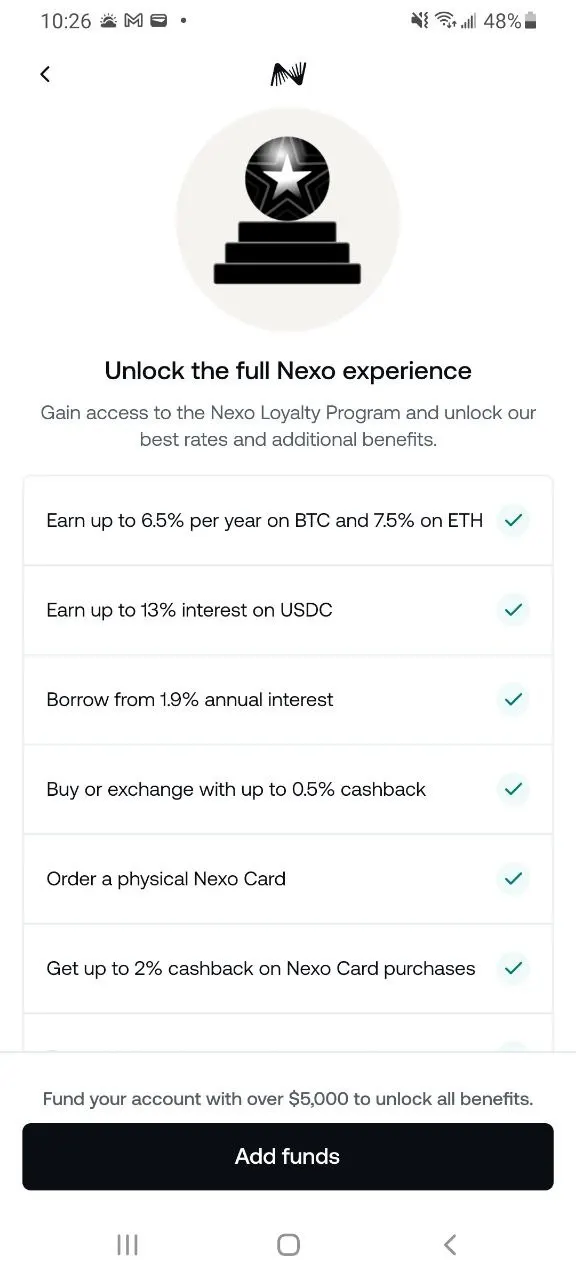
- Every headline rate is gated. Nexo’s app wants a $5,000+ portfolio before full benefits unlock. Tria’s top boosts need its paid Premium membership (now called Max). Hyperbeat’s cashback boosters ask for $1,000 held in USD or its vault, or $1,000 of card spend in 30 days, and its trader rates start at $1M of 30-day volume.
- Four of the five are self-custody; Nexo is the one custodial product. The risk is different and no smaller. The self-custody four earn from on-chain strategies that can lose money; Nexo replaces that with a claim on a company.
- Only Ether.fi puts spot stocks and metals inside the card app. Tokenized S&P 500, Nasdaq 100, Tesla, NVIDIA, gold, platinum, all marked “Buy, sell and use as collateral”. Hyperbeat has equities too, but as perp contracts at up to 40x, which is a different animal.
The five, side by side
Every figure in the in-app column was on a screen of the named app on 27 August 2026. The last column uses the test from our yield research: does the money the card debits grow without being moved first?
| App | Earn (in-app, 27 Aug 2026) | Card rewards | Invest leg | Yield on spendable balance |
|---|---|---|---|---|
| Ether.fi CashOpen Ether.fi CashPartner link. | USD vault 5.35%, EUR 5.41%, USD RWAs 5.98% | Up to 3% in ETHFI since 12 Sep 2026 (Core, first $2K/mo) | Tokenized stocks & metals, spot, usable as collateral | Yes: Direct Pay debits the vault |
| TriaTria sign-upPartner link. | USDC and AUSD up to 9.38% (7.38% base), wBTC up to 2.99% (30 Sep 2026) | 1.5-6% by tier, capped | Perps on Decibel and Hyperliquid, 20x shown in-app | No: Earn vaults are separate from the card |
| MetaMaskGet MetaMaskPartner link. | mUSD 7.1% APY (variable) | 1% virtual; 3% metal (first $10K/yr, $199/yr; Metal orders paused since 2 June 2026) | Swaps; perps up to 50x (blocked in US, UK, Ontario, Belgium) | Yes: the card spends the earning mUSD account |
| NexoOpen NexoPartner link. | Up to 13% on USDC, 6.5% BTC, 7.5% ETH (top tier) | 0.5-2% in NEXO (Credit Mode, $5,000+ portfolio) | Buy/exchange crypto in-app (up to 0.5% back) | Yes: Debit Mode spends the earning balance |
| HyperbeatOpen HyperbeatPartner link. | “USD Savings” up to 4.42%/yr (pages say up to 8%) | 0.20% base plus four 0.20% boosters, ceiling 1%; 3-12% on trading-volume tiers; paid in WHYPE | Perps up to 40x: crypto, equities, commodities, indices | No: the spendable USD balance earns nothing |
Does Ether.fi Cash earn on the balance it spends?
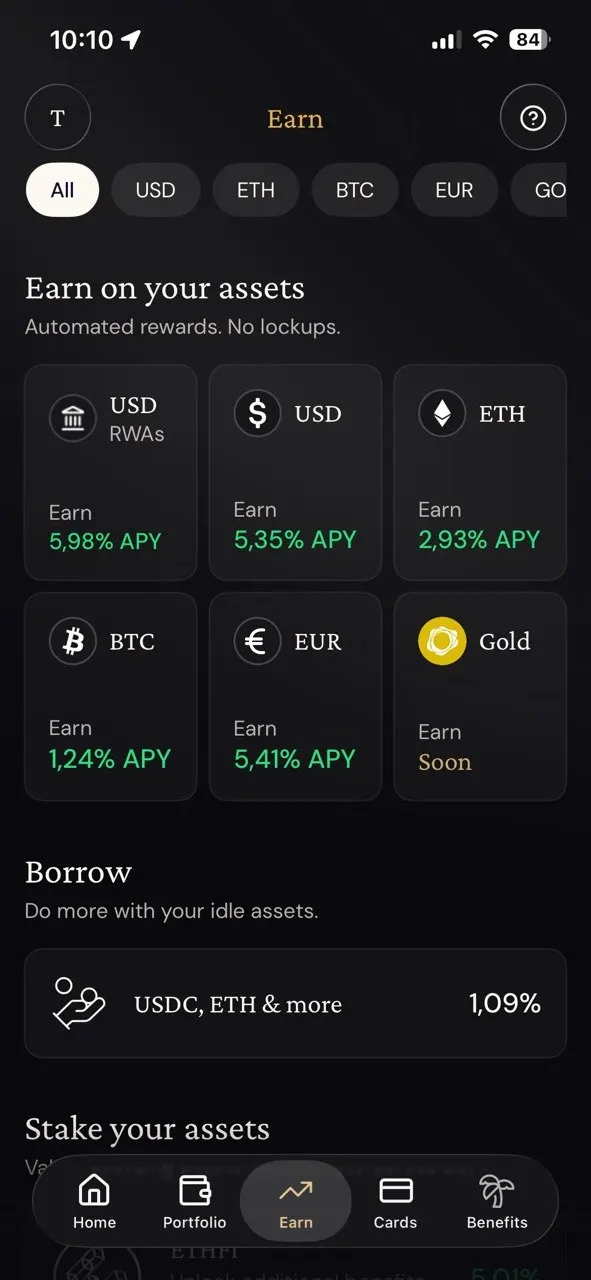
Yes, in Direct Pay Mode. Ether.fi Cash is a self-custody credit card. Collateral stays on-chain; purchases either open a borrow against it or, in Direct Pay Mode, debit the USD vault directly, so the balance earns right up to the moment you pay. On 27 August 2026 the Earn tab listed 5.35% APY on the USD vault, 5.41% on EUR, 5.98% on USD RWAs, 2.93% on ETH, 1.24% on BTC. A Gold vault says “Soon”. Borrowing from 1.09%. The same numbers sit on ether.fi/liquid, to the decimal. Two of the other four apps fail that check.
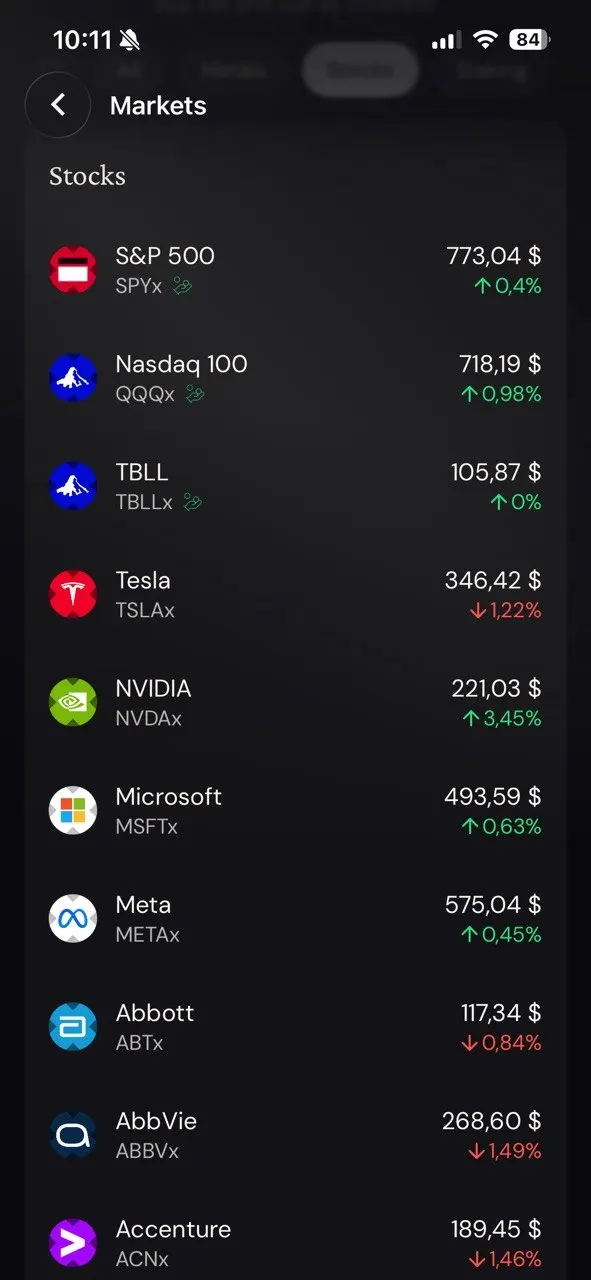
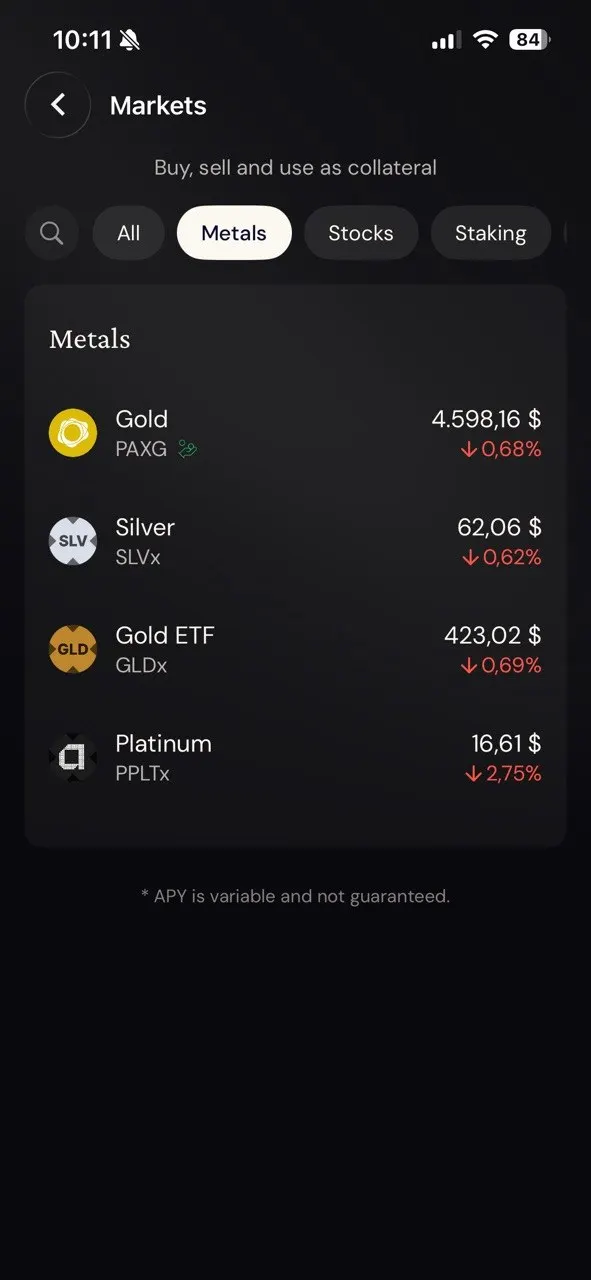
The invest leg is the widest of the five. The Markets tab carries tokenized stocks: S&P 500 (SPYx), Nasdaq 100 (QQQx), a T-bill tracker (TBLLx), Tesla, NVIDIA, Microsoft, Meta. Below them, a metals row: gold (PAXG), silver (SLVx), a gold ETF tracker (GLDx), platinum (PPLTx). The header over all of it reads “Buy, sell and use as collateral”, and that last clause is why the tab matters here: a tokenized stock in this app can back the card. There’s a staking board too (weETH 2.38%, Symbiotic weETHs 3.5%, staked BTC 0.15%, sETHFI 5.01%). The footnote on the same screen says “APY is variable and not guaranteed”. Ether.fi is the only one of the five that prints that caveat where the rates are.
The costs are the ones any credit card has. Borrowed balances accrue interest at a variable rate. The help centre publishes no number, and it names the lender two ways: Aave v4 in one article (20 August 2026), a dedicated onchain lending market managed by ether.fi in another (14 August 2026). Either way, the balance wants paying down like any card. Cashback tiers by spend: the 3% Core rate covers the first $2,000 a month, and on 12 September 2026 the payout switched from USDC to ETHFI. The tokens are converted at the price when the purchase clears, locked for 7 days, and claimable from $5. Since 11 September, Direct Pay Mode lets you rank which vault asset is spent first, across USDC, USDT, EURC, liquidUSD, liquidReserve, liquidEUR and frxUSD. FX is 0% on USD and EUR purchases, and roughly 1% plus a membership-tier margin of up to 0.5% in other currencies.
Tria: three yield numbers in one summer
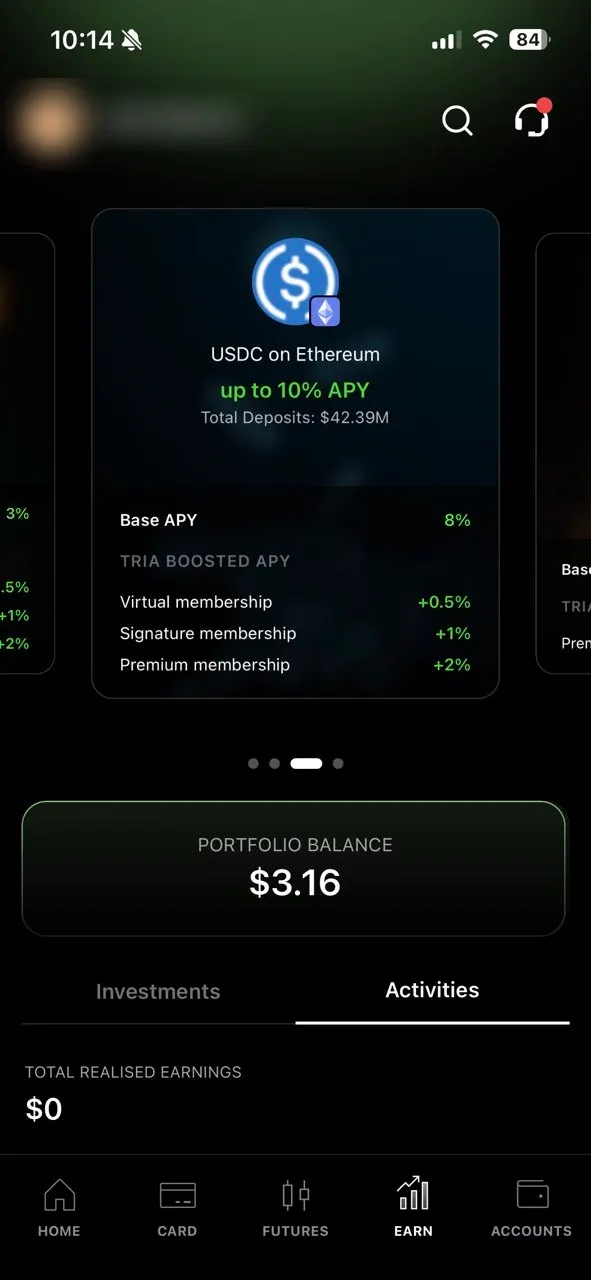
Tria’s card is a 0% APR credit line. Crypto collateral gets posted per dollar charged and auto-repaid from the linked wallet, so the card balance itself earns nothing; the earn leg lives in separate self-custodial vaults. What those vaults showed on 27 August 2026: USDC on Ethereum up to 10% APY (8% base plus 0.5 to 2 points by membership tier), AUSD on Monad up to 9.41% (7.41% base plus a 2-point Premium boost), wBTC up to 5% (3% base). Now the same numbers over time. The AUSD tile showed up to 22.17% APY on 28 July 2026. On 27 August the landing page headlined “Earn up to 15% yield on idle crypto”, no asset attached, the third different headline figure that summer. And a real 117-day AUSD position we held returned roughly 4.8% annualised. Three numbers for one product, and our statement disagrees with all of them.
A month later the tiles had moved again. On 30 September 2026 USDC on Ethereum and AUSD on Monad both read up to 9.38% on a 7.38% thirty-day base, and wBTC on Ethereum up to 2.99% on 0.99%. The boosts were unchanged at 0.5, 1 and 2 points, but the tiers now carry new names: Lite, Pro and Max.
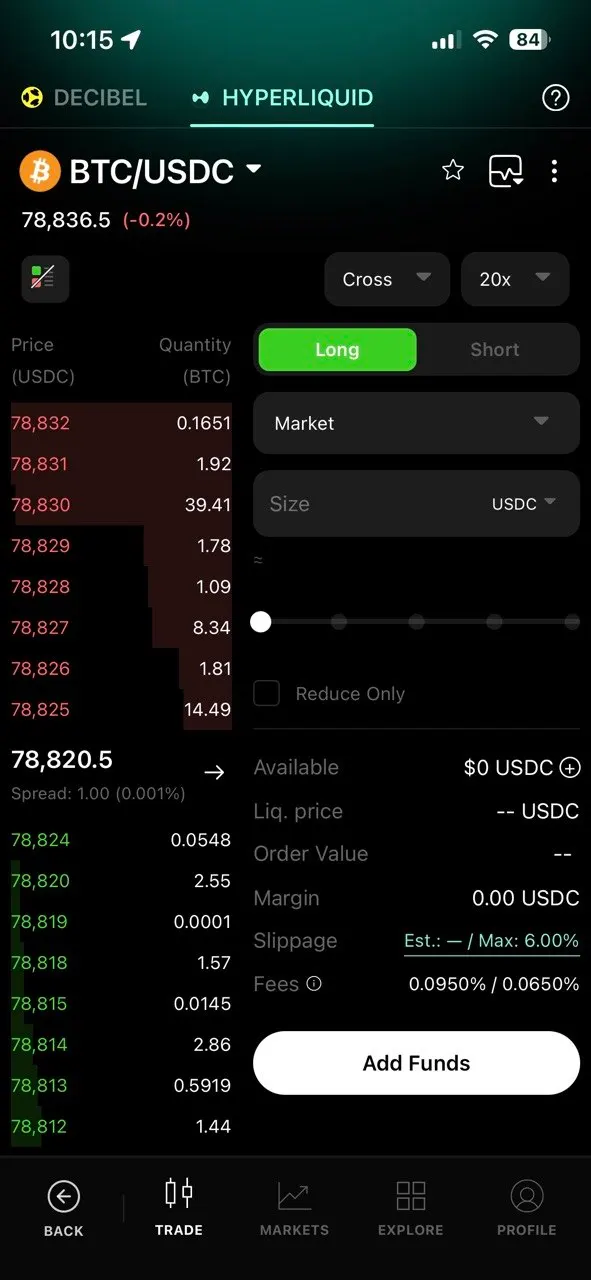
The invest leg is a full perp terminal with two venue tabs, Decibel and Hyperliquid. We opened BTC/USDC on the Hyperliquid tab, 20x cross, and the fee line read 0.0950% / 0.0650%. No Tria document we have read contains that number. Hyperliquid publishes 0.045% as its own base taker rate, and Tria’s futures terms state “The Tria Platform does not currently impose any fees”. The comparison is our arithmetic, not Tria’s: the terminal shows roughly double the venue’s base taker, and no document says whose the extra half is. MetaMask has the same gap; at least it publishes its all-in figure. On the spend side, one number we measured ourselves: a one-euro purchase on 28 July 2026 came to about 2% over the ECB reference rate all-in. Visa’s own rate that day sat 0.47% above the ECB, and on top came the 1% Visa FX fee and Tria’s 0.50%, exactly as the app lists them. That measurement is written up in advertised vs measured.
MetaMask: the rate that moved up, not down
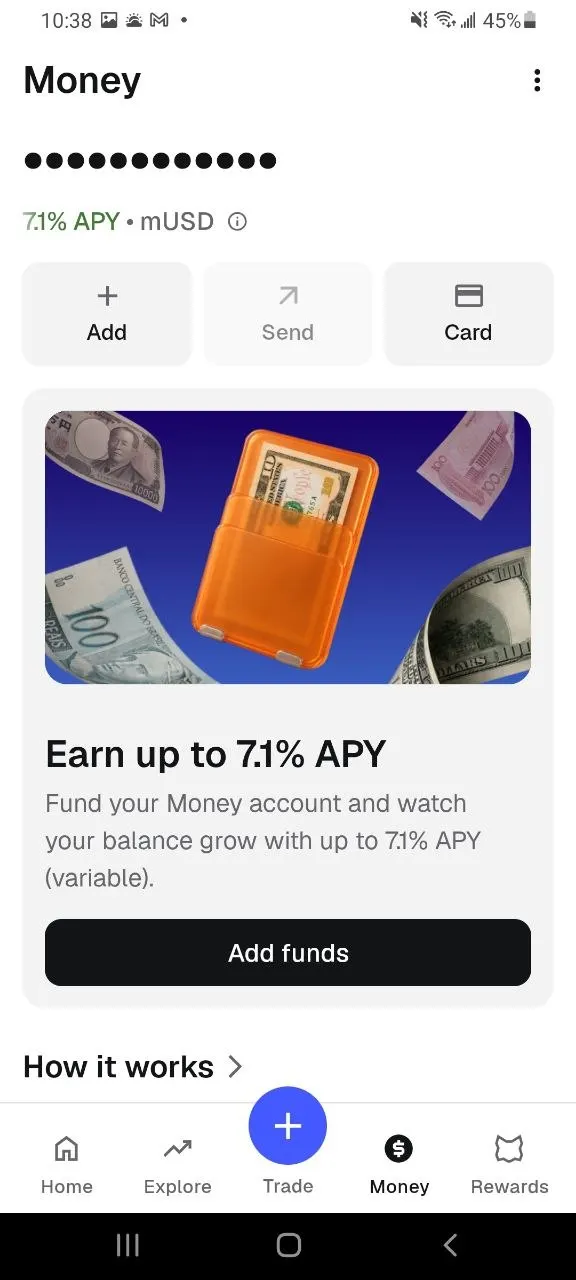
MetaMask is the one case where the app beat the marketing. The Money tab headlined “Earn up to 7.1% APY” on mUSD, a 1:1 dollar-backed stablecoin, on 27 August 2026. The figure MetaMask published in July was 4%, with a 6% promo. The loop itself is the simplest of the five: mUSD earns, stays liquid with no lockups, and the card spends straight from it. No move-money-first step. Card terms: 1% back in mUSD on the virtual tier, 3% on the first $10,000 a year on the $199/year Metal tier, which was US-only and has taken no orders since 2 June 2026. Conversion is at Mastercard’s own rate, but the fee table charges the free tier 1% cross-border whenever the merchant sits outside your country, and 0.5% on both tiers when you spend a stablecoin in a currency that is neither yours nor the merchant’s. A Canadian paying in USDC at home pays the 0.5%.
Two things keep it from being the default pick. MetaMask is not taking new sign-ups in the US or the UK; it gives no date for either pause, and the notice was already on its help centre in June 2026. That leaves a 47-country card centred on the EEA, Canada and Latin America. And the invest leg has its own, different map: perps run to 50x by MetaMask’s own figure but the feature is blocked in the USA, UK, Ontario and Belgium. The card’s country list and the desk’s country list are separate documents. We keep finding that in this product class.
Nexo: the highest rates, behind a $5,000 door
Nexo is the custodial outlier and the oldest lend-and-spend business in the group. Debit Mode does the earn-while-you-spend loop properly: the spendable balance, branded Flexible Savings, earns daily compound interest at up to 13% p.a. on USDC by asset and loyalty tier, no separate vault. And credit where due: the app is blunt about what its headlines cost. One loyalty screen we captured lists 6.5% on BTC, 7.5% on ETH, 13% on USDC, borrowing from 1.9%, up to 2% card cashback, then closes with “Fund your account with over $5,000 to unlock all benefits.” Every big number and the gate, in one frame.
The fine print stacks tiers on tiers. Outside Argentina, card cashback (0.5 to 2% in NEXO tokens, or 0.1 to 0.5% in BTC by tier) needs Credit Mode rather than Debit Mode, plus that $5,000+ portfolio. So the earn leg and the rewards leg never run at full rate on the same balance at the same time. The invest leg is plain: buy and exchange crypto in-app, up to 0.5% back, no leverage. Availability is the EEA, Andorra, Monaco and the UK, plus Argentina since 8 July 2026, and the physical card is orderable again, but only with a $5,000 portfolio, Gold or Platinum tier and an active virtual card. One more thing about the 13%. The rate is real. It is paid by a company you are lending to, not by a protocol you hold keys to.
Hyperbeat: three published rates, a fourth in the app
Hyperbeat runs the loudest version of the pitch, “Liquid Banking”: one Pay Wallet that saves, spends and trades at up to 40x. It also runs the loosest numbers. Its USD+ vault has three published rates: “Target yield: 3–8% APY” in the help centre, “typically 5–8%” in the docs, “up to 8%” on the homepage. The app adds a fourth. On 27 August 2026 the Cash & Savings screen listed one “USD Savings” balance at “Up to 4.42% per year”. Below every published range. No realised or historical figure exists anywhere, and the spendable USD balance itself earns nothing until you move it.

In our nine-card trading-desk dataset, Hyperbeat is the only product where one balance backs both legs: the Terms define card spending and perp trading against the same Pay Wallet. Cashback follows the same gating pattern as everything else here: 0.20% on all spend, four 0.20% boosters for holding $1,000 or $10,000 and for spending $1,000 or $10,000 in 30 days, ceiling 1%, and 3-12% only on trading-volume tiers that start at $1M, all paid in WHYPE tokens rather than the currency you spent. The card is virtual-only. FX runs 0.4-1% over the Visa rate. And then there is the tab that made us laugh, then think: fantasy football, a $5,000 weekly prize pool, free to enter, top 25% win cash, inside what the landing page calls liquid banking. That is where this category is drifting.
The app is the document now
No single rate is the story here. The story is that the screen inside the app and the marketing page outside it have turned into different documents. On 27 August Tria’s landing page said 15%, and its USDC vault screen said 8%, or 10% with the top paid boost. Hyperbeat’s homepage says up to 8%; its app says 4.42%. MetaMask published 4% and pays 7.1%. Nexo’s screen is more candid than its own marketing, since the $5,000 condition shares a frame with every big number. Ether.fi was the only one of the five where app and website agreed to the decimal on the day we checked. Also the only one printing “variable and not guaranteed” next to the rates.
What we would do with this: if the yield is the point, ask which balance earns: three of these five pay on the money the card spends, and two make you move it first. If the trading is the point, remember that three of the five settle on the same order book, so holding two of them is not diversification. And write the date next to any rate you copy down. Of the numbers in this article, at least three changed inside the previous six weeks.
Leverage warning: the perpetual futures offered inside Tria, MetaMask and Hyperbeat can lose more than the margin committed to a position. None of these venues offers negative-balance protection or compensation-scheme cover, and on-chain venues have liquidated and force-settled positions during incidents before. Yield rates on this page are variable, unguaranteed, and were captured on a single day.
Reader questions on rates, custody and the trading leg
Which crypto neobank pays the highest rate on money you can actually spend?
Do the in-app rates match what these apps advertise publicly?
Which of these apps lets you invest in stocks?
Are crypto neobanks banks? Is the yield guaranteed?
Method
All five apps were installed and opened on our own devices on the morning of 27 August 2026, captures time-stamped 10:10 to 10:48, on accounts we control; the Tria and Ether.fi accounts hold our own funds. We captured the earn, card and trading screens as presented, without edits. In-app figures were then compared against each issuer’s public pages, same day, same network, and against the corresponding rows of the Sweepbase dataset, which were updated where the app contradicted them. Fee and availability figures not visible in-app are cited from issuer documents as recorded in the dataset, with read dates. We hold affiliate relationships with all five issuers. Placement and the findings above are not affected by them, and the same divergences are recorded in the dataset rows regardless of relationship.
Corrections
If an issuer publishes a realised rate, changes a gate, or believes a capture misrepresents its product, we correct the page and log the change. See the editorial policy.