


A weekly email on crypto card fee changes, new cards and cashback cuts.
Top 10 crypto cards ranked by real fees (2026)
Of the 143 cards obtainable today, 10 made this list: the ones with the highest net value once per-purchase fees are subtracted from cashback, counting only base-tier rates a new applicant gets on day one. Screened September 25, 2026.
Most crypto card rankings sort by headline cashback. We sort by what is left in your pocket after the fees the marketing pages bury. Using the 177-card Sweepbase database, we ran a single number on every card, cashback minus per-purchase fees, and the rankings shifted enough that we wrote this guide. The card most people search for is not on the list at all this time, because its fee schedule can no longer be scored.
Below are the 10 cards with the highest Net Value Scores in our current dataset. Every card on this list can be held at $0 issuance and $0 annual fees. We excluded promotional rates, tiered staking requirements, undisclosed FX fees, and time-limited offers. What counts is the base-tier rate available to a normal applicant on day one.
176
Cards analysed
Live and discontinued, thin entries left out, of 177 in the database
54
Cards with 0% FX fee
31% of the catalog
43
Cards with FX ≥ 2%
Where the headline cashback rarely survives
1.2%
Average FX fee
Across all cards that disclose a number
32
Self-custody options
Obtainable cards that keep crypto in your own wallet
81
Truly zero-fee cards
No issuance, no annual
All figures pulled from data.csv. These tiles describe the whole catalog, discontinued cards included, minus thin entries. The ranking itself only considers cards obtainable today.
| Card | Value |
|---|---|
| 0% FX | 54 cards |
| 0.01–1% | 24 cards |
| 1.01–2% | 53 cards |
| 2.01–3% | 19 cards |
| 3%+ | 6 cards |
Bleap, a self-custody card, sits in the 0% bucket. Krak sits there too: it is custodial but charges 0% explicit FX on its EEA and UK cards. A card in the 2%+ buckets has to pay out more than 2% cashback just to break even abroad. Where a card sits here matters more than its headline rate.
Why I started ranking by real fees
Most card-comparison sites rank by cashback percentage, which is the metric the issuers want highlighted. Cashback is the last variable in the cost equation. A 4% cashback rate is great if there is no annual fee, no FX fee on the kind of spend the user does, and no monthly tier subscription gating the rate. Some of the highest-cashback cards in the database lose money after you add up issuance, FX, and annual fees, while a 0.5% cashback card with no other fees comes out ahead.
The ranking below sorts by a percentage score: base-tier cashback minus the explicit fee charged on every home-currency purchase. Cross-border FX is listed per card and not scored, and every card on the list can be held at $0 issuance and $0 annual fees. I have published the inputs to the calculation so anyone can recompute with their own numbers. The cards that rank well in this view are not the cards the issuers spend the most marketing dollars promoting. Choose by cashback headline alone and you are choosing whoever has the loudest marketing department.
How the score is calculated
The Net Value Score is one subtraction, and higher is better:
Net Value Score = Base cashback % - Explicit per-purchase fee %
A positive score means the card's cashback outweighs the fees you can see, on a percentage basis. A score of +3.0 means you keep 3% on every home-currency dollar spent. Three accounting rules apply to every card the same way. First, we score home-currency spend: the fees that hit a purchase made in the currency your card runs on. Cross-border FX fees (Ether.fi charges about 1-1.5% outside USD and EUR at Core, Solid 2% outside USD at its Core tier, Bybit 0.5% in the EEA band) stay out of the score, because they depend on where you travel; each card section lists them instead. Second, flat crypto-to-fiat conversion fees do count, because they hit every purchase regardless of currency: Binance and Bybit each charge 0.9%, and that lands in the fee term. MetaMask's 0.5% charge on USD-stablecoin purchases lands there too: the card has no local-currency stablecoin outside the US, and US sign-ups are paused, so every new holder outside Argentina (which is exempt) pays it at home. Third, where cashback is tiered, we score the tier a new user lands on with no deposits, no staking, and no paid plan. Earlier versions of this page applied the FX rule unevenly between Ether.fi and Bybit; one convention now applies everywhere.
We reviewed the 143 cards you can still obtain, out of 177 in the Sweepbase database. Only base-tier, non-promotional cashback rates were counted. Cards requiring token staking, VIP tiers, or time-limited offers to reach their advertised rates were either scored at the base tier or excluded entirely. Cards with undisclosed FX fees were excluded because we cannot calculate a reliable score without transparent data. The same rule now cuts the other way: cards that do not publish a base-tier cashback rate are out too, even famous ones.
What we excluded: promotional rates that expire, tiered cashback requiring staking, undisclosed FX fees, and conditional rewards that require additional deposits or spending thresholds. The Sweepbase index holds 177 cards; the 143 obtainable ones were eligible.
This model captures explicit, published fees. It does not capture hidden conversion spreads, off-market exchange rates, or variable ATM surcharges. The section on what the score leaves out covers these.
The ranking in one table
| Rank | Card | Per-purchase fee | Cashback (base) | Score | Network | Custody |
|---|---|---|---|---|---|---|
| #1 | Ether.fi Cash Card | 0% (about 1-1.5% outside USD/EUR at Core) | 3% in ETHFI (to $2K/mo) | +3.0 | Visa Signature | Self-custody |
| #2 | Solid Card | 0% on USD (2% other currencies at Core) | Up to 3% USDC ($50/mo cap) | +3.0 | Visa Platinum Credit | Self-custody |
| #3 | Bleap Card | 0% | 1% (USDC) | +1.0 | Mastercard | Self-custody |
| #4 | Gemini Credit Card | 0% | 1% (up to 4% categories) | +1.0 | Mastercard Credit | Custodial |
| #5 | Kolo Card | 0% on USDT, USDC and EURC (no rate published for other crypto) | 1% BTC ($100/mo cap) | +1.0 | Visa Platinum | Hybrid |
| #6 | Bitpanda Card | 0% | 1% (crypto-funded only) | +1.0 | Visa Platinum | Custodial |
| #7 | Binance Card | 0.9% conversion | 1.5% | +0.6 | Mastercard | Custodial |
| #8 | MetaMask Card | 0.5% stablecoin fee at home for non-US holders (1% more cross-border) | 1% (mUSD) | +0.5 | Mastercard | Self-custody |
| #9 | Wirex Card | 0% | 0.5% (USD) | +0.5 | Mastercard | Hybrid |
| #10 | Bybit Card | 0.9% conversion | 1% | +0.1 | Mastercard | Custodial |
All 10 cards can be held at $0 issuance and $0 annual fees. The scores reflect base-tier cashback minus explicit per-purchase fees on home-currency spend (higher is better); cross-border FX is shown in brackets, not scored. The Ether.fi and Solid tie breaks on spend room: Ether.fi holds its 3% up to $2,000 of monthly spend, while Solid's $50 cap runs out near $1,650. Within the +1.0 group, unconditional cashback ranks ahead of conditional, so Bitpanda's crypto-funded-only rule puts it last of the four. Kolo's 1% carries no condition, so it ranks ahead of Bitpanda. It sits behind Bleap and Gemini because its +1.0 assumes a conversion rate that Kolo does not publish and we have not yet checked on a live purchase. MetaMask and Wirex tie at +0.5; MetaMask ranks ahead because its 1% has no monthly cap, while Wirex stops paying out past $25 a month. Bybit takes the last place at +0.1. Kraken, which held tenth place until Kolo joined the list, scores +0.0 and now sits just outside it. For a full fee breakdown including ATM limits and conversion details, visit each card's page on Sweepbase.
| Card | Value |
|---|---|
| Ether.fi (0% fee on USD/EUR, 3% in ETHFI to $2K/mo) | 3 |
| Solid (0% home-currency fee, 3% USDC to $50/mo cap) | 3 |
| Bleap (0% FX, 1% base cashback) | 1 |
| Gemini (0% FX, 1% base (4% on gas, EV charging, transit and rideshare)) | 1 |
| Kolo (0% markup on USDT/USDC/EURC, 1% BTC to $100/mo cap (conversion rate not yet checked)) | 1 |
| Bitpanda (0% FX, 1% on crypto-funded spend) | 1 |
| Binance (0.9% conversion, 1.5% base tier) | 0.60 |
| MetaMask (0.5% stablecoin fee at home outside the US (1% more abroad; Metal orders paused since 2 June 2026), 1% mUSD cashback) | 0.50 |
| Wirex (0% FX, 0.5% USD) | 0.50 |
| Bybit (0.9% conversion, 1% cashback (EEA)) | 0.10 |
Two cards tie at +3.0, then nothing until the crowded +1.0 shelf. Below Binance nothing clears half a percent. Kolo joined the +1.0 shelf in this update, which pushed Kraken, free but reward-less at the tier we score, out of tenth place at +0.0.
Per-purchase fee against cashback, card by card
Red bars are the per-purchase costs we score; green bars are savings
Ether.fi
Solid
Bleap
Gemini
Kolo
Bitpanda
Binance
MetaMask
Wirex
Bybit
FX fee (cost)Cashback (savings)
#1
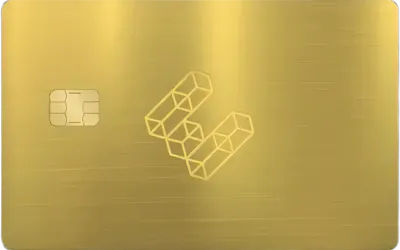
1. Ether.fi Cash Card. Score: +3.0
Score: +3.0FX: 0% USD/EURCashback: 3% in ETHFIVisa SignatureSelf-custody
The Ether.fi Cash Card is the highest-scoring card in our ranking. Ether.fi deploys a dedicated smart contract, the ether.fi Vault, for each user, and the card spends against that DeFi collateral without selling your ETH, so your assets keep earning yield while you pay in fiat. The Core tier pays 3% cashback on the first $2,000 of monthly spend, stepping to 1% up to $3,000 and 0.5% beyond. That cashback has been paid in ETHFI since 12 September 2026: tokens are converted at the price when the purchase clears, locked for 7 days, and claimable from $5. There is no FX markup on USD or EUR purchases, which is the home-currency case we score, so the full 3% survives as a +3.0 net. On the Visa Signature network, you get purchase protection, extended warranty, and travel benefits that many crypto cards lack. Available in 91 countries and territories, per the issuer's regions article (read 24 September 2026).
Best for: DeFi users and ETH holders who want to keep exposure to their crypto while spending in fiat. Self-custody means your keys, your coins, with no exchange counterparty risk. The cashback now arrives in ETHFI, so it carries token price risk that the old USDC payout did not.
Watch for: Onboarding requires familiarity with wallets, gas fees, and smart-contract vaults, so it is not ideal for crypto beginners. The 3% is a spend band, not a flat rate: it steps down past $2,000 a month at the Core tier. EUR purchases earn on a shorter ladder measured in dollar terms (3% to $800, 1% to $1,500, then 0.1%), the trade-off for the 0% EUR FX that Ether.fi documented from 24 June 2026 and still labels beta. And spend outside USD or EUR costs about 1% FX plus up to 0.5% at Core, which matters for travelers even though it sits outside the home-currency score.
Open Ether.fi Cash CardPartner link.
#2
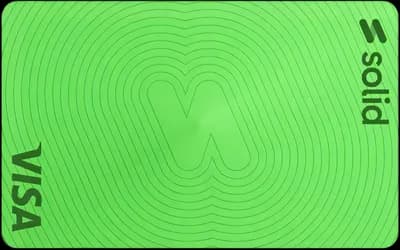
2. Solid Card. Score: +3.0
Score: +3.0FX: 0% USD / 2% other (Core)Up to 3% USDCVisa Platinum CreditSelf-custody
The Solid Card pays up to 3% cashback at its Core tier, capped at $50 a month, and the "up to" matters: that is how Solid itself phrases it, because the rate stops once the cap fills. The card runs on US dollars and charges nothing on a USD purchase, so the scored net is +3.0, tied with Ether.fi; Solid takes second because its cap runs out sooner. Solid counts 105 countries, including the UK and every EU and EEA member state, plus Latin America, Africa, Asia and 30+ US states, one of the broadest regional footprints of any self-custody card in our database. The cashback is paid in USDC into Solid's savings vault, where it is converted to soUSD, so there is no volatile reward token to sell. FUSE, which an earlier version of this page named as the reward currency, is a deposit asset on the platform (corrected July 2026).
Best for: Users who spend in US dollars and want a self-custody card with stablecoin cashback across a wide list of countries.
Watch for: The $50 monthly cap means the 3% stops mattering above roughly $1,650 of monthly spend. The higher caps sit behind the Prime and Ultra tiers, earned with points or a FUSE stake, which our base-tier rule ignores. Any purchase outside USD costs 2% at Core (1% for the card provider plus 1% for Solid; 1.5% at Prime, 1% at Ultra, per Solid's card fees and limits page, read 24 September 2026). For a euro or pound spender that fee lands on every purchase and turns the +3.0 into roughly +1.0, which is why this score only describes dollar spending.
Open Solid CardPartner link.
Bleap charges 0% FX on stablecoin spending and pays 1% base cashback in USDC on eligible purchases, on up to 3,000 EUR of spend a month. Rides and food delivery earn 3%, and a named list of subscriptions (Netflix, ChatGPT, Steam and others) earns 20% on a capped monthly amount, but the flat 1% is what we score. The 2% on restaurants and supermarkets was a promotion that ended on 31 May 2026. The card is built around stablecoin wallets: you load USDC or USDT and spend directly at Mastercard merchants without converting to fiat first, which is how Bleap gets to 0% FX. Bleap never holds your funds; transactions are approved from your own wallet.
Best for: Users in the EEA or Switzerland who already hold stablecoins and want a zero-fee crypto card with self-custody, especially if they pay in several currencies and want to avoid FX markups.
Watch for: The category rates flatter the math. On a typical $2,000 month with $15 of streaming in it, the blended rate works out to roughly 1.15%, not anything near the 20% headline. Bleap is also a newer entrant with a shorter track record than established players. Its card terms cover only the EEA and Switzerland, not the UK, and Bleap itself warns that residents of countries like Italy or Spain may not yet have access.
Open Bleap CardPartner link.
The Gemini Credit Card is a full credit card, with a credit check and an APR, and it charges 0% foreign transaction fees. The 2.49% an earlier version of this page charged against it is Gemini's exchange fee for buying crypto. It never applies at the checkout. Cashback is category-based: 4% on gas at the pump, EV charging, transit, taxis and rideshare (on the first $300 of monthly category spend, then 1%), 3% on dining, 2% on groceries, 1% on everything else. We score the 1% floor, because that is the rate every dollar is guaranteed to earn; the categories are upside on top. Rewards are paid instantly in bitcoin or another of the 50+ cryptos on Gemini.
Best for: US residents who spend heavily on gas, dining, and groceries and want crypto rewards on a familiar credit card product. The category structure rewards specific spending patterns better than flat-rate cards.
Watch for: This is a credit card with a variable APR of 18.99-34.99%. Carrying a balance wipes out the cashback within a single billing cycle. USA only, with no international availability. The credit check requirement and APR risk make this unsuitable for users who cannot pay in full each month.
Gemini Credit Card sign-upNot a partner link.
Kolo's virtual Visa Platinum card costs nothing to issue and has no annual fee. It pays 1% back in bitcoin, credited daily and capped at $100 a month, which covers about $10,000 of monthly spend. New cardholders get 2% for their first 30 days after activation; our rules ignore welcome rates, so we score the 1%. Kolo publishes a 0% FX markup on USDT, USDC and EURC, and its FAQ says other crypto is converted to the local currency "for no extra fee". With no published per-purchase fee to subtract, the 1% scores +1.0. Kolo lists 170+ countries, sanctioned jurisdictions excluded, and the card works with Apple Pay and Google Pay.
Best for: Spenders who want their reward in bitcoin and pay from USDT, USDC or EURC, the balances where Kolo publishes its 0% markup.
Watch for: The +1.0 assumes Kolo adds no hidden markup when it converts crypto at checkout. Kolo publishes no conversion rate, and we have not verified one on a live purchase. An earlier version of this page charged Kolo a ~1% conversion fee that no Kolo page supports. If a live purchase shows a markup, the score drops by that amount. The card is virtual only: Kolo planned a physical card for Q3 2026, but kolo.xyz did not mention one on 24 September 2026. Custody is hybrid, KYC is mandatory, and the daily spending limit depends on verification and can be reduced to $0 at any time. Bitcoin cashback also carries price risk until you sell it.
Open Kolo CardPartner link.
Bitpanda's Visa Platinum card always met the bar: free issuance, no annual fee, 0% Bitpanda FX fee with only the standard Visa rate applied, and 1% cashback. The condition sits in the funding source. Cashback pays on crypto-funded purchases only; transactions funded from fiat, stablecoins, metals or stocks earn nothing. Fund from crypto and the full 1% applies, which is why Bitpanda scores +1.0 with a condition the other +1.0 cards do not carry, and ranks last within that group.
Best for: Eurozone users already on Bitpanda who hold crypto balances and want a regulated, bank-grade card without adding another app.
Watch for: The crypto-funded rule is easy to trip without noticing: pay from a EUR or stablecoin balance and that purchase earns 0%. Custodial, so your assets sit with Bitpanda. Euro area countries only, except Cyprus, with no UK or US access, and card replacement runs €5.90.
Open Bitpanda CardNot a partner link.
The Binance Card is a prepaid Mastercard, and the programme scored here is the Brazilian one. Binance also runs a local card in Argentina and a Global Program through Immersve, whose fee article names Colombia, Peru, some CIS countries, Armenia and New Zealand. Binance publishes no full country list ("Eligibility is confirmed at the time of the card application"), and the card is not offered in the US or the UK. In Brazil, cashback runs on spend-based tiers: 1.5% below 500 BRL of monthly spend, 2% up to 5,000 and 3% above that. The tier you hit applies retroactively to the whole month. We score the 1.5% entry tier against the 0.9% crypto-to-fiat conversion fee, which nets +0.6. Since June 2026 the cashback is credited in BRL rather than BNB, so the reward carries no token volatility. Spending comes directly from your Binance account, so you can pay with BTC, BNB, USDT or any of the other supported assets.
Best for: Brazilian users already on Binance who want to spend crypto at physical merchants. Mastercard acceptance is good across the country, and heavier spenders climb to 2% or 3% without staking anything.
Watch for: Cashback is capped at 500 BRL/month, a low ceiling for higher spenders. Foreign-currency purchases add another 1-2% FX on top of the 0.9% conversion fee, which wipes out the score for cross-border spend. The custodial model means your assets sit on the Binance exchange, carrying counterparty risk.
Binance Card sign-upNot a partner link.
#8

8. MetaMask Card. Score: +0.5
Score: +0.5FX: 0.5% stablecoin fee at home, 1% more abroad (Metal orders paused since 2 June 2026)Cashback: 1%MastercardSelf-custody
The MetaMask Card extends the MetaMask wallet into physical spending through a Mastercard that pays 1% cashback in mUSD. The card has no CAD, MXN, BRL or EUR stablecoin, so everyone outside the US spends USDC or mUSD, and the fee table charges 0.5% on a stablecoin "denominated in currency not of cardholder country or merchant country" (Argentina exempt). For a Canadian buying groceries in Canada that 0.5% is a home-currency fee, so it lands in the score: 1% minus 0.5% is +0.5. When the merchant is abroad, a further 1% cross-border fee applies on the Free tier; like every FX fee here, that stays out of the score. The Metal tier, with 0% cross-border fee and 3% cashback, has taken no orders since 2 June 2026. Transactions are funded directly from your MetaMask wallet, keeping the self-custody model that MetaMask users already rely on. It is offered in most of the EU/EEA, Switzerland, Canada and parts of Latin America; new sign-ups are paused in the US and the UK. The card's main advantage is integration: no new app to download, no new wallet to set up.
Best for: Existing MetaMask users in the EU/EEA, Canada or Latin America who want to spend their wallet balance at Mastercard merchants without switching apps.
Watch for: The 1% cashback is modest next to the top two, and the 0.5% stablecoin fee halves it at home. The Metal card tier with 3% cashback costs $199/year, was US-only, and has not taken orders since 2 June 2026. Cashback is paid in mUSD, which is more complex than simple fiat returns. The card spends from Linea, Base, Solana or Monad, so funds sitting on Ethereum mainnet have to be moved first.
Get MetaMask CardPartner link.
Wirex lists no foreign transaction fee on any plan, and the free Base tier pays 0.5% back on every purchase, a +0.5 score. The reward now arrives in USD rather than in Wirex's own token, an improvement over the old WXT model. Higher tiers reach 8%, but they are gated on holding WPAY, so the free tier is what we score. The app exchanges between 40+ fiat and crypto currencies, and Wirex's supported-countries list (11 September 2026) names 73 countries: the UK, all 30 EEA states, Switzerland, Australia, New Zealand and markets across Asia, the Gulf, Africa and Latin America. The US, Canada and Singapore are not on it.
Best for: UK and EEA users who want a proven issuer with 0% FX and would rather have a small reward than none.
Watch for: Base-tier redemption is capped at $25 a month, so past roughly $5,000 of monthly spending the effective rate drops below the stated 0.5%. The overflow carries forward rather than expiring, but it only becomes spendable if you climb a tier. And while the official FX fee is 0%, the terms leave the conversion rate to Wirex's discretion and disclose no markup, promising the interbank rate only for major currencies during market hours. Our hidden FX fees guide lists Wirex in its trap table for this reason: the 0% we score covers explicit fees only, and the real cost of spending crypto through this card depends on a conversion rate you cannot see in advance.
Get Wirex CardPartner link.
Bybit's European card, issued under its MiCAR licence through bybit.eu, pays 1% cashback on eligible purchases with no cap, no tiers, and no minimum. It has been live since June 2026. The explicit per-purchase cost is a 0.9% crypto conversion fee, which leaves a thin +0.1 net. An uncapped 1% is unusual in this list: Solid, Bleap, Kolo and Wirex all cap theirs. It runs as a Mastercard in the EEA and a Visa in Asia-Pacific.
Best for: EEA spenders already on Bybit. The 1% never caps, but the 0.9% conversion fee grows with spend too, so the net stays at +0.1 at any volume.
Watch for: Bybit does not publish the exclusion list behind "eligible purchases", so some categories will earn nothing. Spending outside your card's home currency adds an FX fee on top of the conversion fee (0.5% in the EEA band, more elsewhere); like every cross-border FX fee in this ranking it stays out of the score, but it drags the real net negative for travel. Not available in the US, UK, Canada, or Singapore, and the non-EEA versions use VIP-tiered rewards with small monthly caps that we do not score.
Bybit Card sign-upNot a partner link.
Six cards that just missed, and why
These cards narrowly missed the top 10 or were excluded because of specific conditions. Two of them held ranked spots until recently: Fold dropped out in the previous update, and Kraken in this one.
Kraken Card (Mastercard Debit, Custodial) held tenth place at +0.0 and dropped out when Kolo entered at +1.0. It costs nothing to get or keep and passes on the Mastercard exchange rate, but its cashback is a ladder set by your 30-day average balance: 0% under EUR/GBP 200, 0.5% from 200, 1% from 1,000, 1.5% from 10,000 and 2% from 50,000. A new applicant with nothing deposited starts at 0%. UK and EEA residents who keep a few hundred euros or pounds on Kraken anyway would land at +0.5 or better.
What fell out earlier, and why. Fold Card held third place at +1.5 in the previous version of this list, scored as a credit card paying 1.5% in bitcoin on the free plan. Fold's card today is a prepaid Visa, and its rewards go to Fold+ members only ($10 a month or $100 a year): 0.5% back in bitcoin, up to 1.5% in rotating categories. Without Fold+ the card earns no percentage back, so the free card scores +0.0, and it charges $3.00 per foreign transaction unless you pay for Fold+. Deblock Card also scores +0.0: its free Standard plan has no cashback at all; the paid Premium plan pays 0.1% on euro-settled payments and 1% only on other currencies. Deblock remains a good pick for combining a bank account with IBAN and a non-custodial wallet in one app.
Trade Republic Card (Visa, Custodial): 0% FX fees and 1% "saveback" into your investment portfolio. That math would land it in the +1.0 group at positions 3-6, but the saveback only triggers if you deposit an extra €50 a month. That makes it conditional cashback, which is why we excluded it. BaFin-regulated, it is a reasonable option for German and EU residents willing to meet the deposit condition.
Wayex Card (Visa, Custodial): no fee on USD spending and 1.5% on other currencies, but no cashback program at all. That works out to +0.0, the same score as Kraken and Deblock. Unlike those two, Wayex has no path to a positive rate today: no balance ladder, no paid plan with rewards. The X-Points programme an earlier version of this page described pays nothing today.
Bitget Card (Mastercard in Europe, Africa and Latin America, Visa in Asia-Pacific; Custodial): on paper it clears the bar easily, with 2% base assetback for every cardholder and no fee on USD spending. The issuance fee rules it out. The virtual card costs 0.1 USD to activate within 72 hours of KYC approval and 10 USD after that, and the physical card (Asia-Pacific only) costs 49 USD, so it cannot be held at $0 issuance. Non-USD purchases also pay 1.7% once monthly spend leaves the assetback allowance.
Popular cards we could not score
Several cards with big marketing budgets and affiliate programs show up in "best crypto card" lists elsewhere. We excluded them for specific, documented reasons, listed below.
| Card | FX fee | Cashback | Why excluded |
|---|---|---|---|
| Coinbase Card | $0 (spread undisclosed) | Variable, US only, no published rate (the "up to 4%" belongs to the Coinbase One Card, an Amex credit card) | Coinbase removed its 2.49% conversion fee back in April 2022; the current cardholder agreement lists $0 for card transactions, conversion, international purchases and ATM withdrawals. But rewards rotate monthly with no published base rate, so there is no number to score. The unpublished conversion spread is the real cost. |
| Xplace Card | 1% on Silver and Gold, 0% on Platinum ($999/yr); not published for the free Basic plan | 0.5% Basic to 4% Platinum, in USDC | An earlier version of this list ranked Xplace at +2.0 on a 0% FX assumption. The 0% FX belongs to the $999-a-year Platinum plan. The free Basic plan pays 0.5%, but Xplace publishes no FX fee for it, and an undisclosed FX fee keeps a card out. |
| Tria Card | Up to 3% in the card terms (the international card adds up to 1% on international transactions); we measured a 1.12% spread inside its rate | 1.5% on the first $100 of monthly spend on Virtual, then 0.5% | The disclosed numbers sink it, and the $25 virtual card fails the $0-issuance rule anyway. The "up to 6%" headline needs the Premium tier. Cashback can lag up to 12 months. The international card is for applicants who are not US citizens, and no Tria page says the separate US programme is taking applications. |
| Tuyo Card | 1% on non-USD purchases + 1% outside the US, up to 2%; 0% on USD purchases in the US | TUYO points | Rewards accrue in TUYO points, not a token. Tuyo says it expects to launch a token in 2026, and none trades as of 25 September 2026. No way to assess real value of rewards. |
| Nexo Card | 0.2% EEA/UK/CH; 2% elsewhere | 0.5-2% by loyalty tier | Cashback requires Credit Mode plus a $5,000+ portfolio minimum, and UK users are excluded from cashback entirely. The base case earns nothing, so there is no base-tier rate to score. |
| Trustee, Pintopay, RedotPay, Volet | Various / undisclosed | 0% at the base tier | Either 0% cashback or undisclosed FX fees. Cards with no cashback score 0.0 or negative. Cards with undisclosed FX cannot be scored. |
A card whose issuer discloses its FX fee and publishes a base-tier cashback rate can be scored in a future update. Our affiliate disclosure lists our commercial relationships.
What the score leaves out
The Net Value Score is simple and reproducible. It leaves out five things on purpose.
Conversion spreads are the biggest blind spot. A card may advertise 0% FX fees but apply a 1.5% spread on the crypto-to-fiat exchange rate. This spread is not a "fee" in the card's terms and conditions, but it is a real cost to you. We cannot systematically measure spreads because they vary by asset, time of day, and transaction size. Our crypto card fees guide explains how spreads work.
Token cashback volatility affects several cards on this list. The 1% that Gemini and Kolo pay in bitcoin could be worth half or double by the time you sell. Wirex used to belong in this paragraph and no longer does: it moved its cashback to USD in 2026. Our scoring treats stated percentages at face value, which practically favors cards paying in stablecoins (the USDC from Solid and Bleap) or plain fiat (Binance's BRL). Ether.fi left that group on 12 September 2026, when its payout switched from USDC to ETHFI.
Tier requirements are excluded by design. We score base-tier rates only. If a card offers higher cashback at premium staking tiers, we use the base rate available to all users. Cards with tiered cashback structures may perform better for high-net-worth users willing to stake.
ATM fees, inactivity charges, and card replacement costs are also not included. They are on each card's page.
Category bonuses like Gemini's 4% on gas are scored at the floor rate, not averaged up. Users whose spending aligns with bonus categories will see higher effective returns than the headline score suggests.
Sweepbase earns affiliate commissions from some card issuers linked in this article. Our rankings are based entirely on the Net Value Score formula described above and are never influenced by commercial relationships. Read our full affiliate disclosure.
Related categories
More crypto card comparisons on Sweepbase:
Top five from this ranking
Ether.fi Cash Card3% cashback in ETHFI (Core tier, to $2K/mo), self-custody, Visa SignatureSolid CardUp to 3% USDC cashback, self-custody, 105 countries incl. UK and EUBleap Card1% USDC base cashback, 0% FX, self-custodyGemini Credit Card1% base cashback in bitcoin or other crypto, 0% FX, US credit cardKolo Card1% BTC cashback to $100 a month, 0% markup on USDT, USDC and EURC, hybrid custody
Compare 143 live cards side by side
This ranking covers the top 10 by net value, but the best card for you depends on your country, spending habits, and custody preferences. Use Sweepbase to filter 143 live of 177 cards by region, fees, cashback, network, and custody model.
Custody mix in the 176-card universe
4 of the top 10 cards are self-custody, including both cards tied at the top. Self-custody does not guarantee a cheap conversion, though. Tria is self-custody too, and when we measured it, 1.12 points of a euro purchase sat inside its own exchange rate; Solid charges 2% outside USD at Core.
| Card | Value |
|---|---|
| Custodial | 116 cards |
| Hybrid | 13 cards |
| Self-custody | 47 cards |
Custodial cards (Coinbase, Crypto.com, Binance, Kraken, etc.) still dominate the count, but self-custody and hybrid options now account for roughly 34% of the catalog.
Why this ranking does not match the ones you have read elsewhere
Editorial commentary from Mihail B., who runs the Sweepbase data pipeline and recalculates the Net Value Score every time a card changes its fee schedule.
Why Crypto.com is not here
Crypto.com runs one of the best-known affiliate programmes in this category, and its card sits near the top of many “best crypto cards” lists. Its 5% prepaid rate requires an Obsidian-level CRO lockup of €450,000 (£400,000 or CA$650,000) that almost no one has, and the math at Plus (€3.99/mo, 2%) or Pro (€24.99/mo, 3%) subscription tiers puts the effective rate well below the cards on this list. Those 2% and 3% rates come from Crypto.com's EEA, UK and Canadian card pages; a help article that most likely covers the US prepaid card lists 1.5% and 2.5%, and the US card charges 3% FX on every tier below Private. Our methodology rates only base-tier rates available to a brand-new applicant, and the Basic tier on Crypto.com's prepaid card pages pays 0%.
Self-custody now wins on cost too
Self-custody cards are the principled choice (your keys, your coins), and on this score they are no longer the expensive one. Bleap, Solid and Ether.fi pay cashback rates that match or beat exchange cards with no fee on home-currency spend (Solid does charge 2% at Core outside USD). What custodial cards still do better is mostly UX.
Dropping Coinbase was the hardest call in this update
For months this list scored Coinbase Card at +1.5 using its 2.49% conversion fee. That fee was removed in April 2022, and the current cardholder agreement lists $0 across the board. Zero fees would mean a top-3 finish if the other side could be scored, but rewards rotate monthly, are shown only in the app, and no base rate is published anywhere. A card whose cashback we cannot pin down has no place in a ranking built on cashback minus fees, so it moved to the excluded table. What to do about its one real cost, the undisclosed conversion spread, is a v3 methodology question.
What is missing from this ranking
Three things we are working on for v3 of the methodology: (1) a regional adjustment for taxes the card fee table does not show, such as Brazil's IOF; (2) a volatility-adjusted cashback rate, so cards paying in tokens like ETHFI or BTC do not get the same weight as USDC cashback, plus a redemption-cap term for programmes like Wirex One that pay in dollars but limit how much you can take out each month; (3) a yield-on-balance term for cards that pay a return while you do not spend (Nexo's Debit Mode, Ether.fi's yield-bearing collateral).
Two self-custody cards lead, and Crypto.com is absent
A “free” card with a 2.9% FX fee costs $29 per $1,000 spent abroad, a detail that disappears from comparison sites that rank by headline cashback. Our methodology subtracts the fee you pay on every purchase from the base cashback you earn, one for one, which is why the two cards at the top are self-custody options and Crypto.com does not appear at all. Run your own numbers using your monthly spend and an estimate of how often you cross a currency border.
Frequently asked questions
The formula is: Net Value Score = base-tier cashback % minus the explicit per-purchase fees charged on home-currency spend. Flat crypto-to-fiat conversion fees count because they hit every transaction (Binance and Bybit both charge 0.9%; MetaMask charges 0.5% when a holder outside the US and Argentina spends a USD stablecoin at home, and US sign-ups are paused). Cross-border FX percentages stay out of the score, since they only apply when you spend in a foreign currency; we list them per card instead. Every card in the top 10 has a free tier with $0 issuance and $0 annual fees. For example, Ether.fi Cash Card pays 3% at its Core tier with no fee on USD or EUR purchases, so it scores +3.0.
Because neither side of its equation can be scored anymore. Coinbase removed the 2.49% crypto-conversion fee back on April 6, 2022; the current cardholder agreement lists $0 for card transactions, crypto conversion, international purchases and ATM withdrawals. The only cost is the conversion spread, which Coinbase does not publish. On the reward side, rates rotate monthly and are shown in the app, with no fixed base rate published. A card with an unpublished cost and an unpublished base reward has no place in a formula-driven ranking, so we moved it to the excluded list.
No. Some cards advertise 0% FX fees but embed costs in wider crypto-to-fiat conversion spreads. Our ranking captures explicit fee percentages, so the cost of a transaction may be higher where a spread markup is not disclosed as a fee. Check the effective exchange rate against market rates.
No. Crypto cashback is subject to token price volatility. A 3% cashback in a volatile token could be worth more or less than 3% by the time you sell or use it. Stablecoin cashback (like the USDC that Solid and Bleap pay) carries less volatility risk. Ether.fi moved its cashback from USDC to ETHFI, per its help centre article updated 12 September 2026, so its 3% now carries token risk too. We treat the stated percentage at face value in our scoring, so cards with stablecoin cashback have a practical edge not reflected in the number.
Tria discloses its fees, and the disclosed numbers are the problem. Its card terms allow FX of up to 3% (the international card adds up to 1% on international transactions), and when we measured a euro purchase, 1.12 points sat inside Tria's own exchange rate. The base Virtual tier pays 1.5% on only the first $100 of monthly spend and 0.5% after that, and the virtual card itself costs $25 under the card terms, so it fails the $0-issuance rule as well. Cashback distribution can also lag up to 12 months. The international card is for applicants who are not US citizens, and no Tria page says the separate US programme is taking applications. Tuyo rewards accrue in TUYO points, not a token; Tuyo says it expects to launch a token in 2026, and none trades as of 25 September 2026, so the rewards have no established value. Nexo discloses its FX fees (0.2% in the EEA, UK and Switzerland; 2% elsewhere), but cashback requires Credit Mode plus a $5,000 portfolio minimum, and UK users are excluded from cashback entirely, so the base case earns nothing. We only rank cards with transparent, base-tier rates available to all users.
Sources & references
This is what we read to write the guide: regulators, issuer fee schedules and archived snapshots. Not every sentence above has its own link here. If a number looks wrong, start with these.
- Visa Foreign Exchange Rate Calculator, VisaWholesale FX baseline used to normalise the FX-fee column across the top-10 list.
- Currency Conversion Calculator, MastercardMastercard wholesale rate used the same way for the Mastercard-branded entries.
- Visa USA Interchange Reimbursement Fees, VisaThe merchant-side fee schedule that card rewards are paid out of.
- Sweepbase Crypto Cards Dataset (CSV, CC-BY 4.0), SweepbaseUnderlying spreadsheet with per-card fee fields, the source of every number tabulated above.
- Markets in Crypto-Assets (MiCA) Regulation, European Securities and Markets AuthorityEU rulebook for the crypto side of the EEA cards in this list.